
Executive Summary
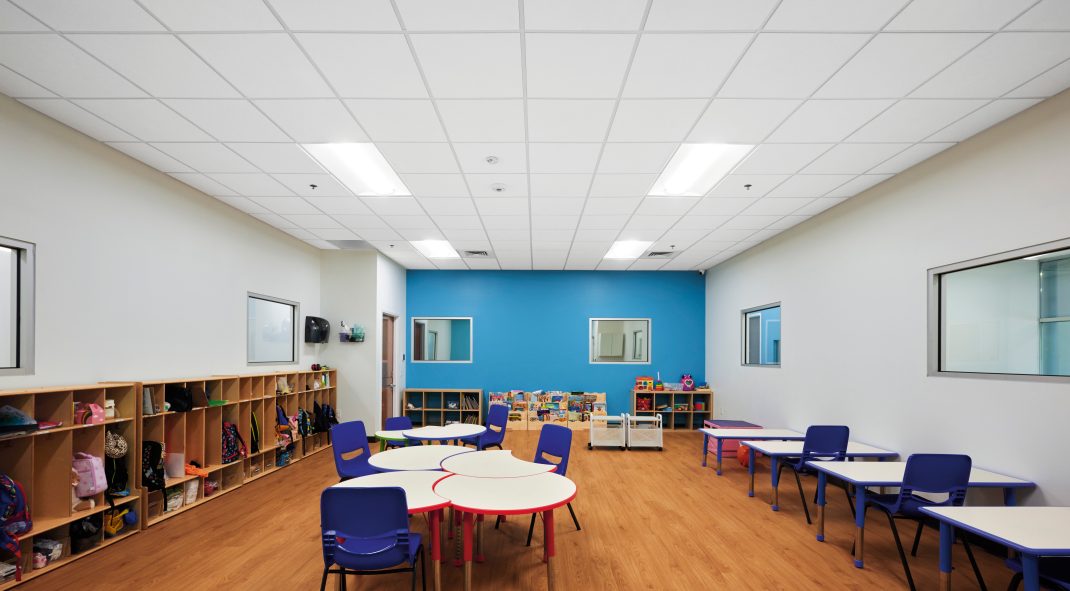
The LEEAP Center, a 25,000-square-foot pediatric and family therapy facility in Charlotte, North Carolina, faced compounding acoustic and thermal challenges as it consolidated multiple locations into a single renovated space. The design team specified Armstrong Ultima® Templok® Ceiling tiles with phase change material (PCM), addressing sound transfer and thermal comfort. A summer 2026 field study confirmed measurable thermal buffering performance, and the system further showed its operational value during a peak summer HVAC failure that could have otherwise closed the facility.
The Challenge
Creating a Calmer, More Comfortable Environment
The LEEAP Center consolidated multiple Charlotte-area therapy locations into a new facility designed to support children and their families through speech therapy, occupational therapy, physical therapy, ABA therapy, and psychological services. For CEO Sharon Jordan and her team, acoustics and thermal comfort were essential—not optional. In pediatric therapy settings, distracting sounds, uncomfortable rooms, and inconsistent temperatures can affect children who may have sensory sensitivities, as well as the clinicians who spend full days providing care. At previous locations, sound frequently traveled between rooms and through hallways. Temperature conditions could also vary significantly, creating discomfort for staff and patients alike.
The new LEEAP Center required a solution that could help create a more controlled therapeutic environment while addressing peak heat gain from above the ceiling.
“Within our expansion over the years, we’ve found that our spaces, even as we’ve grown physically, were just not equipped to handle some of the increased distractions from kids just having a moment. From those in the room next door, to down the hall and throughout the space, you’d know when someone was having a challenging time.”
Sharon Jordan
LEEAP Center, CEO
The Solution
Acoustical Ceiling Tiles with Thermal Performance
The renovation incorporated Armstrong Ultima® Templok® acoustical ceiling tiles with phase change material (PCM). Templok PCM functions as thermal storage within the ceiling. During warmer periods, the PCM absorbs and stores heat that might otherwise contribute to room temperature increases. When conditions cool overnight, the material releases that stored heat and recharges for the next cycle.
For The LEEAP Center, the integrated ceiling approach offered an opportunity to address two critical environmental needs at once: sound control and thermal stability.
“When this connection was made and I learned about Templok and the technology, I thought, ‘how perfect is this?’ Not only is it helping us solve an acoustic issue, but the technology, from what I learned, also helps with temperature regulation, which is so important in a space like ours.”
Sharon Jordan
A Real-World Test
Maintaining Comfort and Staying Open During HVAC Downtime
Soon after move-in, the facility experienced an HVAC issue during a period of hot June weather. With the air conditioning unavailable, the team expected conditions similar to prior facilities, where loss of cooling had previously made spaces difficult—or impossible—to use. Instead, the center remained operational.
This experience gave The LEEAP Center a firsthand view of how the Templok® ceiling could help buffer thermal conditions when cooling capacity was temporarily unavailable and stay open to continue supporting the families.
“We were going through a heat wave during the time when the HVAC wasn’t working,” said Jordan. “I truly believe that because of the technology in the ceiling tiles, we were able to maintain a comfortable temperature throughout the entire space. And it allowed us to stay open; we did not need to close and stop services. If we didn’t have the technology in the ceiling tiles, I believe it would have been hotter, and we would have had to close. Fortunately, that was not the case.”
Sharon Jordan
Measured Thermal Performance
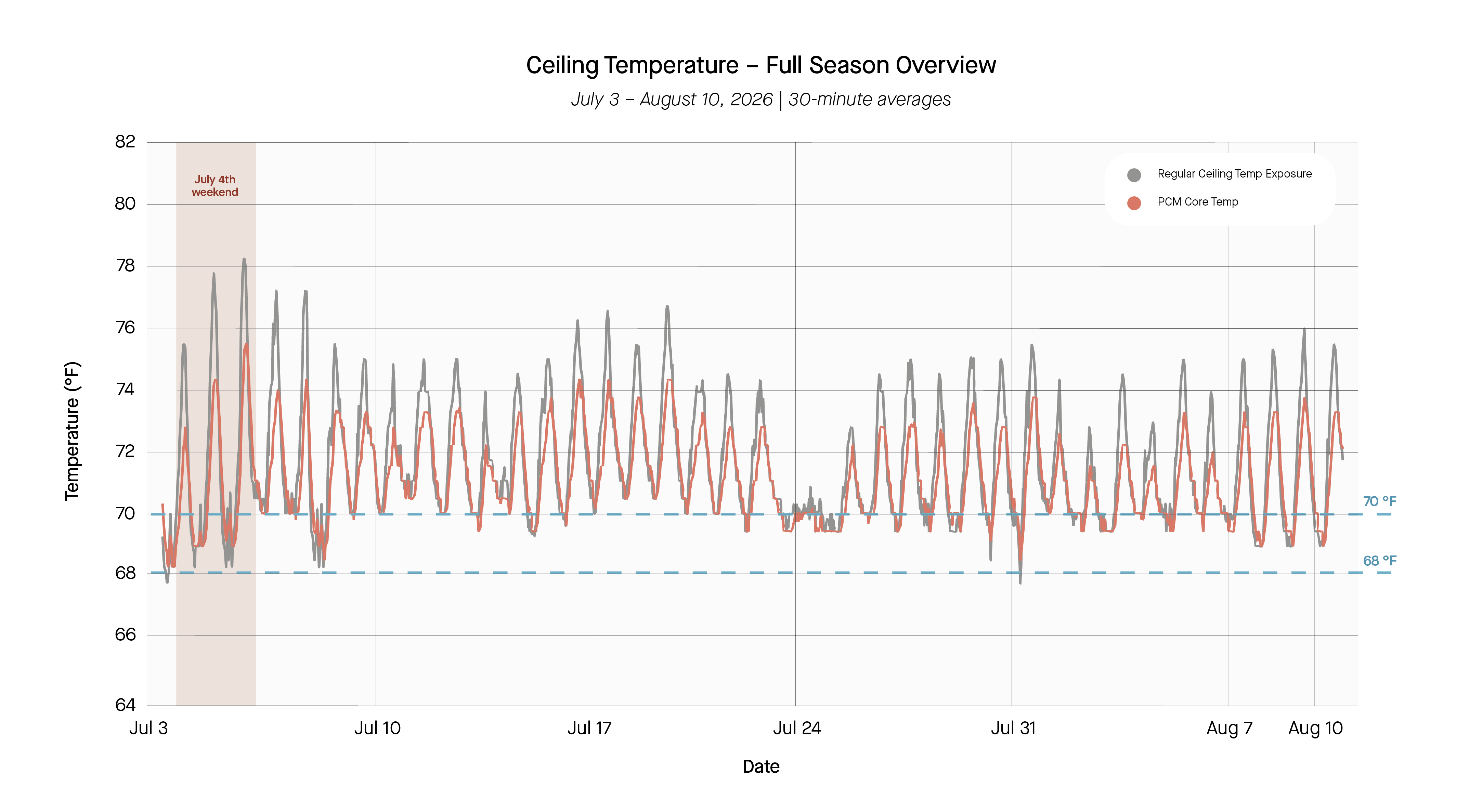
A summer 2026 field study monitored back-of-tile and room-side temperatures from July 3 through August 10, comparing areas with Templok PCM ceiling tiles against comparable non-PCM ceiling conditions.
Key Findings Included
Across 39 summer days, PCM ceiling tiles consistently tracked at lower temperatures than standard ceiling tiles during afternoon peak periods (Chart A).
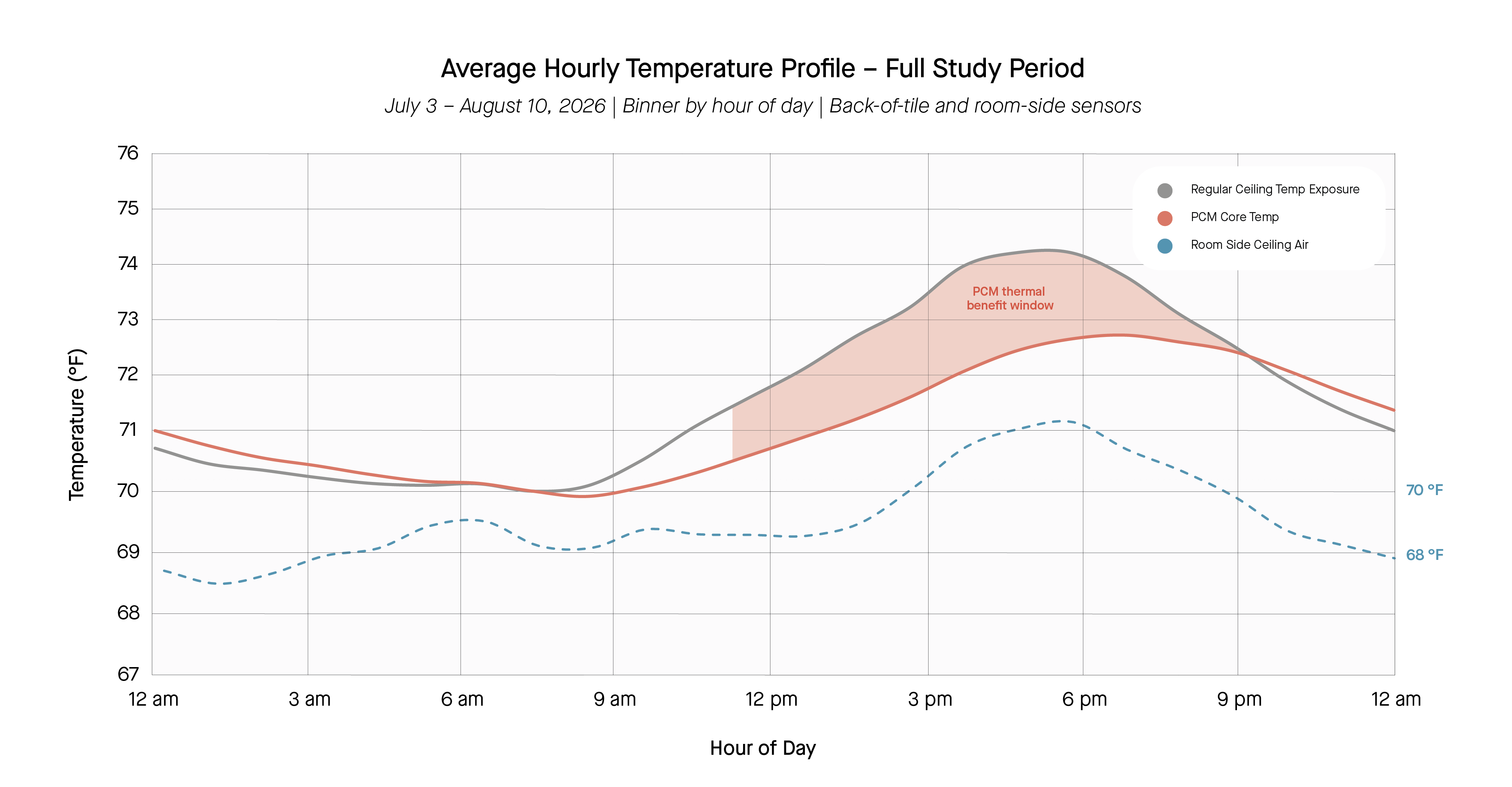
On average, the PCM ceiling was measurably cooler from mid-morning through early evening. The strongest benefit occurred around 3 p.m., when outdoor temperatures and solar heat loads were highest (Chart B).
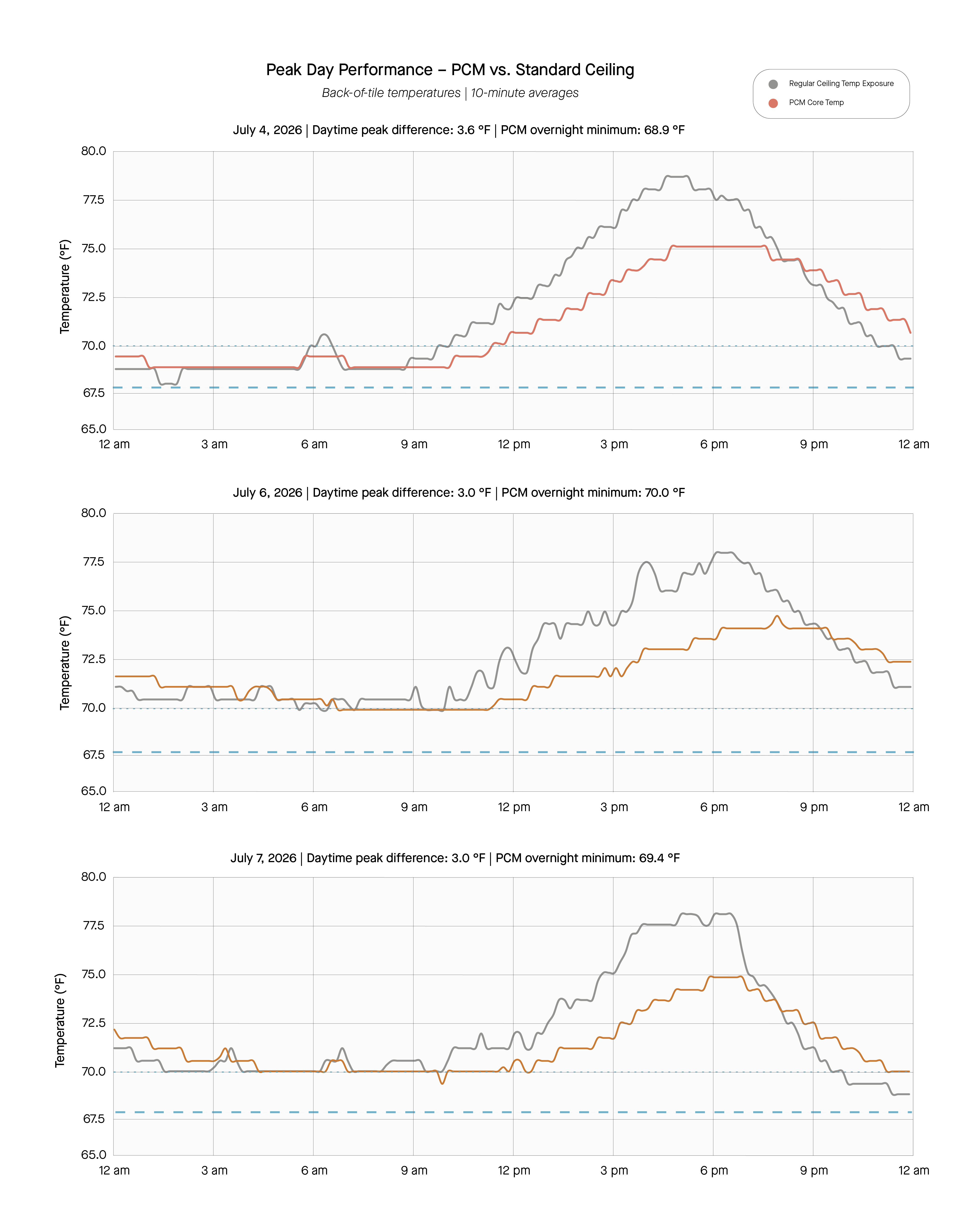
On the hottest recorded days, back-of-tile temperatures in the PCM ceiling were up to 3.6°F cooler than standard ceiling tiles. The PCM absorbed the afternoon heat surge, helping flatten peak temperature conditions above the occupied space (Chart C).
A Quieter Environment for Therapy
The acoustic improvement has also been meaningful in daily operations. The LEEAP Center includes therapy rooms of varying sizes, offices, classrooms, and active shared spaces. Jordan shared how limiting sound transfer helps reduce distractions and supports a calmer experience for both children and staff:
“The speech therapists report that the kids aren’t getting as distracted. You’re not hearing a lot of sound traveling from room to room, and they’re not hearing sounds coming from the hallways into their rooms unless they have one of the Dutch doors open. So acoustically, we have certainly seen a difference in how sound is traveling, or is being transferred, from the hallways. And it’s been very, very helpful.”
The impact extends to the lobby, where numerous children and families may be transitioning at the same time. “Unless you’re in the lobby, you wouldn’t know that a transition was occurring. And sometimes we will have 20 to 30 kids transitioning out, and some coming into therapy, at the same time.
A Win for Children, Families and Staff
The LEEAP Center’s new facility was designed to feel supportive from the moment families enter. By helping reduce sound transfer and buffer temperature swings, the Templok® ceiling contributes to a more comfortable setting for children and the professionals who care for them.
According to Jordan, “The technology and the Armstrong Templok ceiling system has certainly provided a difference not only in the acoustics, but also just in regulating the temperature in the room so that it’s comfortable for the kids and the staff. When we moved in, as a staff we thought our kids would have difficulty with the transition. But they seem so much more at ease. It’s a new space, but it just feels very comfortable. So, for our kids—it’s a win-win for them too.”
Conclusion
The LEEAP Center’s renovation demonstrates how a ceiling system, combining acoustic performance with passive thermal storage, can address distinct environmental challenges through a single integrated solution. The summer 2026 field study data confirms measurable thermal buffering during peak heat conditions, while the June HVAC outage served as an unplanned validation of the system’s resilience. Clinically, the acoustic improvements have reduced distraction for pediatric patients and supported clinician focus throughout the facility.
Looking ahead, Jordan sees clear applicability for other care-based facilities managing similar sensory and environmental demands.
The LEEAP Center project offers a data-supported model for integrating acoustic and thermal performance in a single specification.
“I think it’s a product that daycares and pediatric therapy centers for sure will benefit from, especially if it’s an interdisciplinary therapy space. It’s a great technology and something that pediatric therapy centers should truly look into.”
Sharon Jordan